














Alcon introduces Hydrus Microstent for long-term Glaucoma management in India

The device provides a minimally invasive treatment option aimed at reducing reliance on glaucoma medications while maintaining sustained IOP control

0
86
New Delhi: Alcon, a global eye care company, has launched the Hydrus Microstent in India, a minimally invasive glaucoma surgery (MIGS) device designed to lower intraocular pressure (IOP) in patients with mild to moderate open-angle glaucoma when combined with cataract surgery.
The device provides a minimally invasive treatment option aimed at reducing reliance on glaucoma medications while maintaining sustained IOP control. Hydrus Microstent is the first and only MIGS device supported by a 5-year pivotal clinical study, demonstrating long-term efficacy and safety.
The clinical evidence comes from the HORIZON Trial, which reported five-year outcomes with 80% patient retention (442 of 556 participants). The study showed sustained IOP reduction and lower medication dependence when the device was implanted alongside cataract surgery.
According to Ike Ahmed, Research Director at the Kensington Eye Institute and Professor of Ophthalmology at the University of Utah’s John A. Moran Eye Center, the device represents an important advancement for surgeons managing glaucoma alongside cataract procedures. He noted that patients receiving Hydrus during cataract surgery demonstrated improved outcomes compared with those undergoing cataract surgery alone.
Glaucoma remains a major public health concern in India, affecting an estimated 12 million people, with nearly 90% of cases believed to be undiagnosed.
Amar Vyas, Country Head of Alcon India, said the launch aims to address this gap by expanding access to effective interventional treatments. He added that the device’s Tri-Modal mechanism of action helps restore natural fluid drainage through Schlemm’s canal, enabling sustained pressure control.
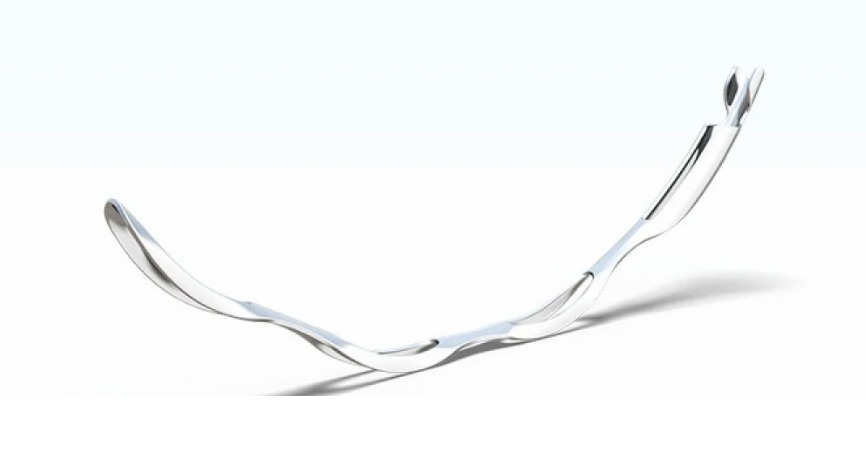
Roughly the size of an eyelash, the Hydrus Microstent is designed to dilate and scaffold Schlemm’s canal, restoring the eye’s natural outflow pathway and improving aqueous humor drainage. The implant spans about 90 degrees of the canal, enabling access to multiple fluid collector channels and supporting consistent pressure reduction.
The device has already been implanted in more than 200,000 patients globally and is available in markets including the United States, Canada, Australia, Japan, and several European and Asia-Pacific countries.