




C-CAMP supported by Office of PSA hosts the 2nd India AMR Innovation Workshop in New Delhi

The workshop convened over 100 key stakeholders across the national and global AMR innovation ecosystem in the largest such dialogue of its kind in the Asia Pacific
0
43
New Delhi: The Centre for Cellular and Molecular Platforms (C-CAMP), under the aegis of the India AMR Innovation Hub (IAIH), successfully conducted the 2nd India AMR Innovation Workshop today in New Delhi with support from the Office of the Principal Scientific Adviser to the Govt. of India. 
The workshop convened over 100 key stakeholders across the national and global AMR innovation ecosystem in the largest such dialogue of its kind in the Asia Pacific. 
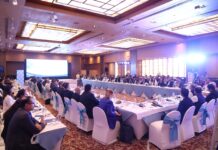
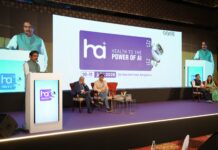
Over 100 academic researchers, industry leaders, clinicians, government policymakers, philanthropies, private funding organisations and public health officials gathered at the workshop held at India Habitat Centre, New Delhi, through day long deliberations on how to break silos, bridge gaps and consolidate efforts in the global combat of the AMR challenge. 
The event featured the launch of some of the breakthrough innovations supported by C-CAMP, under the IAIH, by the Principal Scientific Adviser, Prof. A. K. Sood and technology showcase of some of the innovations supported by C-CAMP, under the IAIH, including air sterilisation systems, rapid genomics-based diagnostics and surveillance, treatment of biopharmaceutical wastewater effluents, antibiotic-free aquaculture and so on, where innovators had the opportunity to interact directly with stakeholders, receiving vital feedback and avenues of collaboration. 
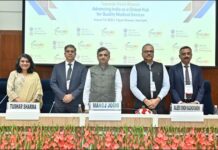
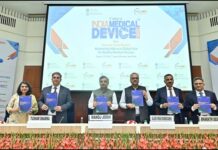
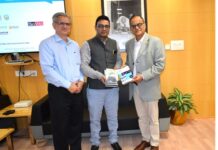
A compendium of AMR solutions supported under the IAIH umbrella was also released by the Principal Scientific Adviser, Prof. A. K. Sood in presence of Dr. Parvinder Maini, Scientific Secretary, OPSA; Dr. Renu Swarup, former Secretary, Department of Biotechnology and Vice Chair for International Centre for Antimicrobial Resistance Solutions (ICARS); and senior representatives from national and international organisations. 
The compendium consists of a cohort of 60 IAIH supported solutions in the areas of preventatives, therapeutics, diagnostics, detection, screening, monitoring, tools for surveillance etc. many of which are at advanced level of readiness or adoption. These technologies address cross sectoral challenges and advance the One Health approach harmonising human medicine, food safety and environmental health in one thread. 
The event also unveiled the second cohort of seven startups selected under the C-CAMP Programme on AMR in the Environment (Call #2), supported by the UK Department of Health and Social Care’s Global AMR Innovation Fund (GAMRIF); and seven winners of the C-CAMP One Health AMR Challenge 2025, supported by the Denmark-based International Centre for Antimicrobial Resistance Solutions (ICARS). The GAMRIF cohort now consist of 16 startups after the two calls. 
The second cohort of the C-CAMP Programme on AMR in the environment includes world-class innovative solutions addressing the rising burden of antimicrobial resistance (AMR) in the environment. This cohort includes Ampligene India Pvt Ltd., BioNEST – BHU, GenePath India Pvt Ltd., IIT Madras, Meril Diagnostics Pvt Ltd., Module Diagnostics Pvt Ltd, CSIR – NCL, where each startup will receive funding, along with 360-degree ecosystem support including on-field testing and validation studies. Their unique technologies will detect resistant microbes and traces of antimicrobials in environment samples, prevent spread of AMR in the environment and treat samples at source to eliminate the risk of contamination with resistant pathogens and antibiotic traces in the environment.
India AMR Innovation Hub (IAIH)
IAIH conceptualised and anchored by C-CAMP, and chaired by the PSA, Govt. of India is an international convergent platform for stakeholders and partners across the AMR ecosystem to come together and build a novel, ready-to-deploy technology pipeline to address challenges across human health, animal and agriculture and environment. 
IAIH has been officially positioned as the innovation arm of the National Action Plan NAP 2.0 on AMR, announced by the Ministry of Health and Family Welfare, Government of India (MoHFW) on 18th Nov 2025 in presence of Hon’ble Union Health Minister, Shri J.P. Nadda. 
The Hub aims to build a go-to pipeline of 10-15 fully mature, TRL 9 and above technologies in the next five years from India and for LMICs across the One Health spectrum.  
C-CAMP conducted a power packed and insightful edition 1 of the IAIH Workshop in Bengaluru on 3 July 2025, and has brought the event to the Capital with the 2nd edition especially in light of the NAP 2.0 launch. 
Launch of IAIH-Grand Challenges and the IAIH-Impact Fund
C-CAMP, under the guidance of the Office of the PSA launched the first-of-its-kind IAIH Grand Challenges to incentivise and identify India’s brightest minds to tackle “un-fundable” problems—from environmental bioremediation of antibiotic waste to rapid, low-cost diagnostics for primary health centres by nurturing not just ideas but commercially viable ventures.
It also launched the IAIH Impact Fund which will be the first ecosystem-wide unified fund input across IAIH partners to improve chances of commercial and impact success that many biotech startups need especially at TRL 4 onwards. By providing dedicated capital, the effort will ensure that a life-saving discovery in a lab does not perish for lack of market support.
Welcoming the participants, Dr. Taslimarif Saiyed, Director-CEO, C-CAMP said: 
“C-CAMP is delighted to host the IAIH Workshop #2 under the India AMR Innovation Hub umbrella chaired by Prof Sood, PSA. 
The second edition of this workshop aims to congregate stakeholders and focus on the road mapping of how the country’s ambitious NAP 2.0 on AMR is going to be implemented and leveraged for strengthening India’s fightback efforts against the urgent crisis. We must work together to foster solutions for AMR by leveraging cutting-edge research and innovation in this domain through the convergence of mandates and collaborative action, which the IAIH platform stands for.”
Prof. Ajay Sood, Principal Scientific Adviser to the Govt of India said, “In India, the AMR stakes are uniquely high. A fragmented healthcare landscape, our vast geographic area, demographic diversity and our role as the “pharmacy of the world” put us at the very epicentre of this challenge. The AMR crisis needs a multi sectoral coordinated response because of the animal-human-food-environmental interface. 
Under the aegis of the India AMR Innovation Hub, C-CAMP has made a pathbreaking effort to move beyond such siloed efforts. I am pleased to see how this hub—anchored by C-CAMP—has become the national nerve centre for AMR innovation now officially announced as innovation arm of NAP 2.0. The workshop in this context, assumes critical importance in shaping India’s response across sectors to NAP 2.0 and breaking silos in innovation development from idea-to-product.”
Dr. Parvinder Maini, Scientific Secretary, OPSA said, “The IAIH serves as a vital link — as a platform for convergence of the whole biotech innovation ecosystem with the policy-making rigour, the implementation machinery and measures for public awareness and surveillance that GoI is pushing for at the highest leadership level. As evidenced by the Hon’ble Prime Minister of India, Shri Narendra Modi’s mention of AMR and its stewardship as part of human healthcare in his December 2025 Mann Ki Baat address and the announcement of IAIH as NAP 2.0 Innovation Arm. 
C-CAMP, the IAIH anchor partner has been building this pipeline of AMR innovations for a decade and today this work has laid the foundation for India’s strategy to counter AMR. The Office of the PSA remains committed to providing the best interventions possible for these scientific breakthroughs to thrive. We are keen to position India as a primary scientific and innovation destination in the global AMR knowledge pool. IAIH is proof that we can become the country that’s the most prepared and ready globally when it comes to drug resistance.”
Dr. Renu Swarup said, “Having seen India’s biotechnology ecosystem evolve over the decades, I can say with conviction that the AMR crisis demands scientific depth, translational capability, and systems thinking. It is not a problem that biology alone can solve, nor policy alone can contain. AMR sits at the intersection of human health, animal welfare, and environmental integrity. India’s response, therefore, lies in embracing a One Health approach as an operational framework, ensuring that our interventions are as interconnected as the microbes we seek to manage.
The PSA-chaired and C-CAMP-anchored India AMR Innovation Hub has been instrumental in nurturing a full innovation continuum—from discovery to deployment. By enabling dialogue between scientists, regulators, clinicians, industry, and communities, IAIH provides the precise architecture needed to ensure real-world impact.”
Panel Discussions and what they covered: 
Panel 1: Top AMR Challenges & Innovation Priorities
Panel 2: One Health AMR Innovations, Environment, Food Chain & Ecosystem-Level Interventions
Panel 3: Creating a Coordinated AMR Innovation Ecosystem & Funding Architecture
Panel 4: Pathways for Deployment & Scale of AMR Innovations