



























New Delhi: In the recent past, we have seen how cannabis has made its way into the medical mainstream in Western nations owing to its efficacy in multiple health conditions, however in India the patients are denied cannabis-based medicines despite a historical background to the usage of herb in both treatment as well as during religious festivals.
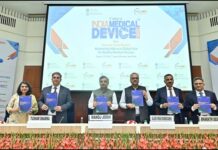
India needs to tweak its legal regulatory system on the lines of countries like Canada and Netherlands to establish newer categories of medicinal products derived from Cannabis, and expand the interpretation and definition of cannabis and its by-products so that cannabis-based medicines become more widely available. This was summed up by experts at a conference titled “Cannabis R&D in India: A Scientific, Medical & Legal Perspective,” jointly organized by the Bombay Hemp Company (BOHECO) and the Council of Scientific and Industrial Research (CSIR)’s Jammu based institute, Indian Institute of Integrative Medicine (IIIM).
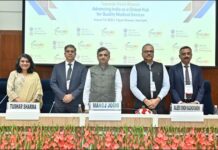
The day-long conference saw the participation of prominent medical experts, policymakers and researchers, including Dr Jitendra Singh, Minister of State for Prime Minister’s Office.
Dr Ram Vishwakarma, Director, CSIR-IIIM in his address welcomed the minister and called for a revisit to the regulations surrounding the research into cannabis for medical usage. He thanked Dr Singh for this support for the initiative.
In his keynote address, Dr Jitendra Singh remarked that the cannabis-based products like Bhaang have been a part of Indian culture, social customs and festivals. “There is a very thin line between use, misuse and abuse of a substance, and it is our responsibility to draw that line so that we do not throw the baby out with the bathwater,” he however cautioned.
“Research into cannabis-based medicines is going to be very important for the management of chronic diseases like diabetes which cause excruciating neurological pain and for which currently there is hardly any relief. Now, as the incidence of non-communicable diseases increase in India, we need to conduct pioneering research on drugs originating from plants and herbs found in the Indian mountainous regions. In the middle of the last century, such research gave us mint, which has now become an internationally used product. We need to replicate this kind of success by exploring the full medicinal potential of cannabis for the treatment and management of pain and health conditions for which there is currently no effective cure,” mentioned Dr Singh.
Mr Jahan Peston Jamas, Co-founder, Bombay Hemp Company which was the co-organizer of the event stated: “The geriatric population of India is poised to reach 100 million people by 2020-2025. Unfortunately, R&D work with other forms of medicine for several critical conditions afflicting the elderly has plateaued. Cannabis has properties of binding with CB1 and CB2 receptors within the human body. Health conditions like mental disorders, rheumatism, osteo-based ailments and heart diseases can be greatly alleviated with the use of cannabis which has almost negligible side-effects, as shown by a range of global regulatory and research work.”
Several challenges exist in mainstreaming the production and consumption of cannabis-based medicines in the country. As per experts, cannabis plant is a victim of misperception despite being an integral part of Indian culture.