



























By Dr Aditi Jain
New Delhi: Nano technology deals with particles that are several thousand times smaller than human hair, and it is being put to use in variety of applications such as drug delivery and diagnostic tests.
A group of Indian researchers has now developed a simple technique for deriving nanoparticles from table sugar and have shown that these particles can be used as sensor for detection of lead in water.
In recent years, scientists have been looking for ‘green’ sources to derive nanoparticles. Super tiny nanoparticles – known as carbon dots – have been derived from lemon peel, banana juice and orange peel. Conventionally, carbon dots are derived from graphite or carbon nanotubes using physical methods.
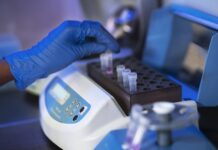
The research team at the University of Calicut has produced carbon dots from table sugar. For this, sugar was melted at high temperature (150 degrees celsius) and diluted with ammonia solution. It was then put under microwave for few minutes and finally filtered and freeze-dried to yield quantum dots containing carbon.