



























The Hyderabad-based eye-care institution will support WHO programmes through evidence generation, workforce training, technical guidance and models for extending services to underserved communities.
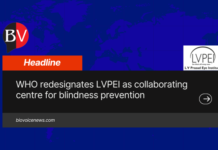
The World Health Organization (WHO) has redesignated L V Prasad Eye Institute (LVPEI) as a Collaborating Centre for the Prevention of Blindness for another four-year term, according to a statement issued by the institute.
The Hyderabad-based institution said the designation would continue until 2030. LVPEI first became a WHO Collaborating Centre in 2001 and has since contributed to public-health eye-care programmes, training and capacity-building initiatives.
WHO Collaborating Centres are institutions designated by the WHO Director-General to undertake agreed activities in support of the organisation’s health programmes. Their work can include research, technical guidance, data generation, training and the development of standards or programme approaches.
Under the proposed work programme, LVPEI said it would support WHO’s efforts to advance universal eye-health coverage by contributing technical and operational expertise. The activities are expected to include generating evidence on eye-care practices, strengthening the eye-health workforce and contributing to the development of relevant guidance.
The institute also plans to draw upon its experience of delivering eye care through a tiered service network extending into rural and underserved communities. Access to appropriate services remains a major global challenge. WHO estimates that at least 2.2 billion people have vision impairment, including at least 1 billion cases that could have been prevented or remain unaddressed.
“This redesignation underscores two decades of collaboration between LVPEI and WHO in taking public health eye care forward,” said Dr Gullapalli N Rao, Founder Chair of LVPEI. “It is an honour and a responsibility.”
Dr Rohit Khanna, Network Director, Public Health at LVPEI, said the designation includes a defined work plan requiring technical contributions to global eye-care strategy over the coming four years.
WHO’s eye-health agenda supports the integration of eye care into health systems through accessible, people-centred services. Collaborating centres assist the organisation by contributing specialist knowledge and implementation experience while remaining institutionally independent of WHO.





 has redesignated L V Prasad Eye Institute (LVPEI) as a Collaborating Centre for the Prevention of Blindness for another four-year term, according to a statement issued by the institute.)