


New Delhi: India sees over 1.4 million new cancer cases annually, most at advanced stages. To expand access to precision care, Elekta is training oncologists in adaptive radiation therapy (ART), a technique that personalizes treatment in real time.
ART uses daily imaging to adapt treatment plans in real time, ensuring precise tumor targeting while sparing healthy organs. This improves accuracy, reduces side effects, and can significantly benefit India, where head and neck, breast, and cervical cancers are most prevalent.
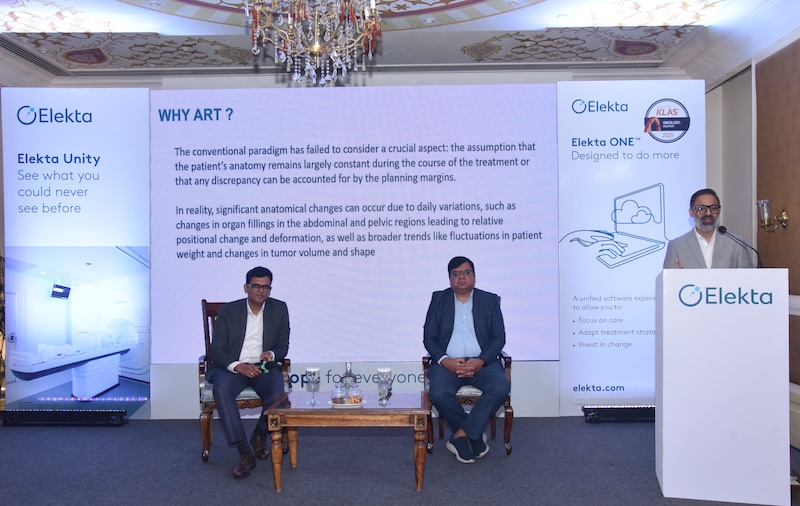
Elekta recently advanced this effort through Elekta Connect, a workshop and scientific symposium held in Jaipur. The event combined expert lectures, panel discussions, and a live demonstration of ART, aimed at accelerating clinical adoption across India.
“Through Elekta Connect, we want to equip oncologists—particularly those in high-burden regions—with the tools and expertise to deliver precision cancer treatments,” said Shankar Seshadri, Vice President, Elekta India. “ART is no longer aspirational; it is becoming the standard of care.”
Hands-on training formed a key part of the program. “Elekta’s workshops and tailored innovations are bridging the skill gap and empowering clinicians to expand access to world-class cancer care,” noted Karan Mehrotra, Marketing Head – India, and Marketing Manager, Middle East & Africa at Elekta.
Clinicians at the event also highlighted ART’s promise. Dr. Ramesh Purohit, Professor of Radiation Oncology at Geetanjali Medical College and Hospital, Udaipur, said, “Adaptive radiotherapy allows us to modify treatment plans in real time, which is especially critical for head and neck cancers where tumor and organ motion is common.”
Dr. Manish Chomal, Senior Radiation Oncologist at RHL Renova Cancer Center, Jaipur, added: “ART will be especially valuable for patients diagnosed at advanced stages, where precision can minimize side effects and improve quality of life. With wider access to screening and precision therapies, we can make cancer care more equitable and effective across the country.”
Dr Sagar Sengupta, Director, National Institute of Biomedical Genomics (NIBMG) and Director (Additional Charge), National Brain Research Centre (NBRC) shared his insights on the latest initiatives, importance of industry-academia collaboration, increased government funding, and evolution of research ecosystem
Binoy Gardi, Managing Director and Group CEO, Veeda Lifesciences shared insights on his latest role and top priorities; the company's latest initiatives, outcomes of key acquisitions and future plans