






























The MTaI roundtable called for faster implementation of trade commitments, regulatory cooperation, stronger component supply chains and improved mobility of specialised professionals.
The Medical Technology Association of India (MTaI) has called for closer coordination between India’s Free Trade Agreements and domestic policies covering medical-device regulation, public procurement, investment and workforce mobility.
 The association said tariff reductions under trade agreements would need to be supported by predictable implementation, clearer regulatory pathways and action on non-tariff barriers to improve access to medical technologies and strengthen India’s MedTech manufacturing ecosystem.
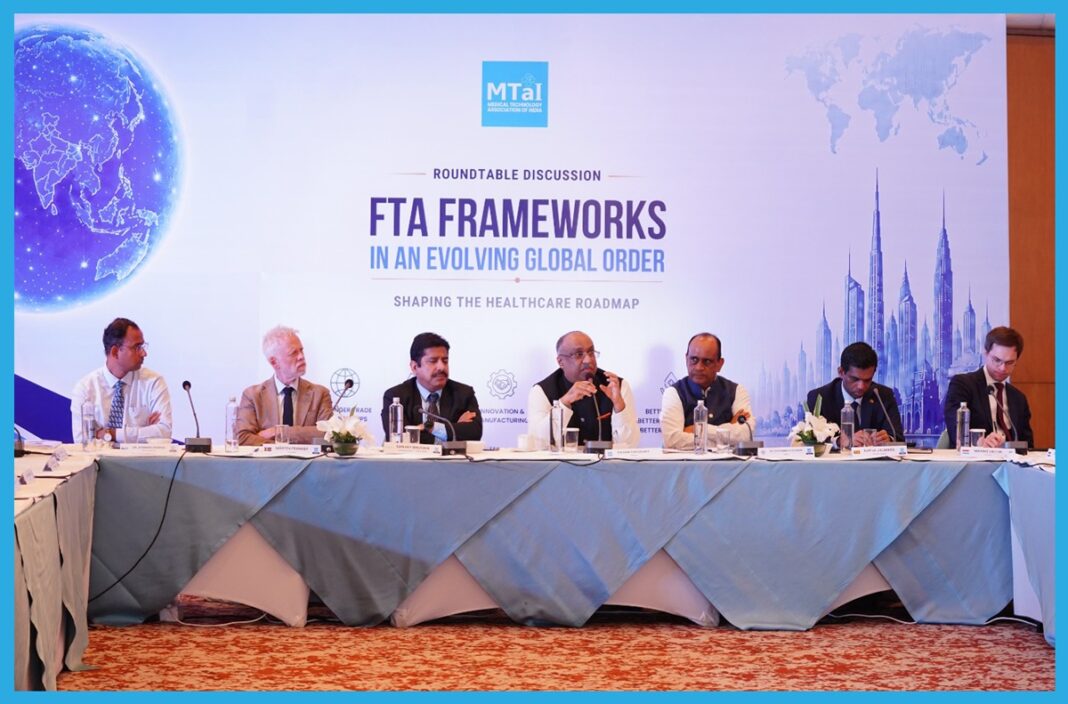
The recommendations emerged from MTaI’s closed-door roundtable, FTA Frameworks in an Evolving Global Order: Shaping the Healthcare Roadmap, held in New Delhi as part of the association’s tenth-anniversary programme. The meeting brought together policymakers, diplomatic representatives, trade specialists and medical-technology industry leaders.
Discussions focused on timely customs notifications, consistent classification of medical devices, simpler rules of origin, regulatory cooperation and mechanisms for resolving implementation difficulties after trade agreements enter into force.
Participants also examined how trade commitments interact with India’s public-procurement framework, including the Global Tender Enquiry mechanism. According to MTaI, lower tariffs alone may not provide effective market access unless companies also have clear approval pathways and predictable procurement conditions.
Pavan Choudary, Chairman and Director General of MTaI, said geopolitical developments were increasingly influencing commercial strategy, supply chains and investment decisions.
“The world is not deglobalising; it is moving towards minilateralism, with regional pacts and FTAs increasingly influencing how companies will source, manufacture and invest,” he said.
Choudary identified implementation of tariff provisions, removal of non-tariff barriers, mobility of services and professionals, and institutional support and investment protection as priorities for translating trade agreements into commercial and healthcare outcomes.
Hilde Koning, Executive Director, India, Netherlands Foreign Investment Agency, said “The roundtable highlighted the value of open dialogue between industry, governments, and international partners, particularly around the practical challenges companies face in cross-border trade and innovation. The Netherlands looks forward to continuing to work with partners in India to make it easier for MedTech companies to collaborate, innovate, and ultimately improve patient outcomes.”
The discussion also examined the need for science-led regulation and faster evaluation of innovative medical technologies.
Dr Gyanendra Nath Singh, former Drugs Controller General of India, said industry proposals should remain ethical, evidence-based and scientifically supported. He said regulatory processes should facilitate innovation while protecting patient interests and improving product quality.
Component availability and export preparedness were identified as additional constraints on India’s ability to benefit from international trade arrangements.
Dr Jitendra Sharma, Managing Director and Chief Executive Officer of Andhra Pradesh MedTech Zone, said strengthening the domestic component supply chain was as important as entering into new trade agreements.
“India must also strengthen support for international regulatory certification, create more agile regulatory pathways and improve export readiness to help Indian companies compete globally,” Sharma said.
He added that the impact of an FTA should also be assessed through the investment, joint ventures and long-term commercial partnerships it generates.
Participants called for greater cooperation on qualifications, credentialing and training standards to improve the movement of specialised engineers, technicians and healthcare professionals involved in installing, maintaining and using medical technologies.
Sanjay Bhutani, Director of MTaI, said delays following the signing of trade agreements could weaken their intended benefits.
“Faster approval pathways, greater regulatory efficiency and predictable implementation will enable companies to plan with confidence, accelerate access to innovation and ensure that the benefits of trade agreements reach patients sooner,” he said.
The roundtable also recommended joint monitoring mechanisms, regulator-to-regulator engagement and dedicated platforms through which governments and industry can address implementation barriers arising under trade agreements.






 has called for closer coordination between India’s Free Trade Agreements and domestic policies covering medical-device regulation, public procurement, investment and workforce mobility.)