






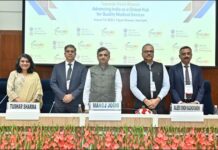
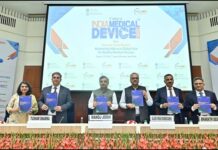
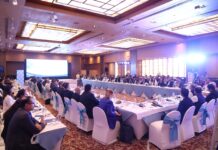



















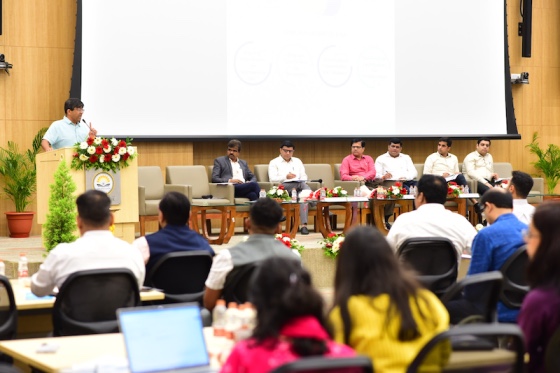
New Delhi: Maharashtra’s cotton sector took a decisive step toward strengthening its global competitiveness with a high-level workshop on “Enhancing Cotton Value Chain Development by Focusing on Quality, Productivity, Production, and Market Access” convened at the Indian Institute of Management (IIM) Nagpur.
The one-day state-level workshop, jointly organised by Hon.Balasaheb Thackrey Agribusiness & Rural Transformation (SMART) Project, MITRA – Maharashtra Institution for Transformation, Maharashtra Village Social Transformation Foundation (VSTF), Indo Cotton Development Association, Grant Thornton and Palladium Consulting India Pvt. Ltd, brought together government leaders, industry pioneers, farmer producer companies (FPCs), and textile stakeholders to shape a unified roadmap for sustainable cotton value chain advancement in Maharashtra.
Inaugurating the session Dr. Rajaram Dighe CEO, VSTF, emphasized the need for India to align with global cotton textile standards, focusing not just on quality but on achieving full traceability across the cotton value chain. Dr. Hemat Vasekar, Project Director, SMART, emphasized the strategic need to move from volume-based cotton production to a quality and value-driven approach. Shri. Vikas Chandra Rastogi, Additional Chief Secretary (Agriculture), highlighted the Government of Maharashtra’s commitment to modernizing the sector through technology adoption, farmer training, and FPO linkages with premium buyers.
Praveen Pardeshi, Chief Economic Advisor to CMO and CEO, MITRA, in his keynote address on “The Cotton Landscape in Maharashtra,” underscored the importance of aligning agronomic practices, contamination control, and market reforms to global benchmarks such as the Kasturi Cotton Bharat initiative—India’s national cotton quality and traceability program.
The technical sessions featured diverse perspectives from prominent organizations, including Welspun Group, Beetle Regen Solutions, RPG Foundation, ICAR-CICR, and TEXPROCIL, among others. Discussions centered on enhancing seed homogeneity, promoting clean cotton harvesting, and upgrading ginning infrastructure to meet global quality norms. Notably, FPO representatives such as Kanchani FPCL and Green Agritech FPCL shared field-level success stories demonstrating how contamination-free cotton and uniform seed selection can command premium prices and unlock access to new markets.The workshop’s breakout sessions delved deep into two key themes:
-
Regenerative Practices and Clean Cotton Harvesting, facilitated by Palladium, emphasizing sustainable agronomy, field-level contamination control, and traceable farm practices.
-
Aligning Production and Ginning with Buyer Standards, led by CITI CDRA, MCX, and industry experts, focusing on investment opportunities, technology adoption, and policy incentives for modernization.