













Kerala govt to establish India’s first Institute of Organ Transplantation in Kozhikode

The new institute aims to revolutionize organ transplantation in India through advanced research, training, and patient care

0
310
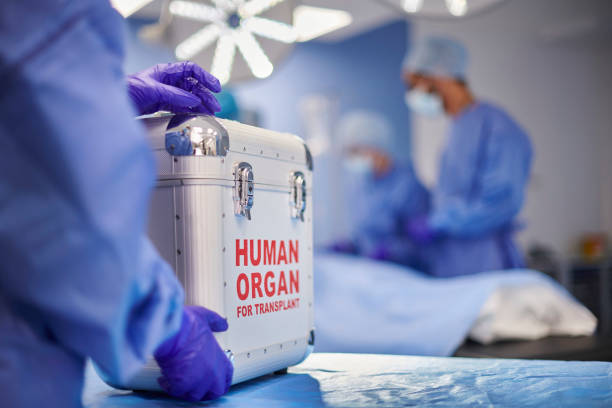
New Delhi: To enhance healthcare infrastructure, the Government of Kerala has announced the establishment of the Institute of Organ and Tissue Transplant at Kozhikode.
The new institute is envisioned as an apex center for research, training, and patient care in organ transplantation and related fields, aiming to develop a Centre of Excellence with a team of skilled doctors, researchers, and health workers.

Currently, only the USA and China have dedicated transplant centers. The Institute of Organ and Tissue Transplant in Kozhikode will be the first of its kind in India, setting a new benchmark for organ, tissue, and cell transplantation. This public sector initiative will significantly reduce the cost of organ transplants, benefiting the underprivileged and promoting medical tourism. The institute is poised to position Kerala on par with highly developed countries in organ transplantation.
The decision to create this institute comes in response to the soaring number of patients in need of organ transplants, the scarcity of available organs, and the lack of basic facilities, including qualified doctors. Organ transplantation, being highly expensive and predominantly 90% conducted in the private sector, often leads to many patients succumbing to their ailments due to the prohibitive costs. The Kerala government aims to provide low-cost organ transplants, create necessary manpower through various super-specialty courses and research programs, and develop an action plan to find and supply healthy organs to patients in need.
According to the Concept Note prepared by HLL Infra Tech Services Limited (HITES), a public sector undertaking under the Government of India, the total cost of setting up the Institute of Organ and Tissue Transplant is estimated at Rs. 558.68 crores (Phase I: Rs. 373.68 crores + Phase II: Rs. 185 crores). Funds for the project will be sourced from the Kerala Infrastructure Investment Fund Board (KIIFB), and the institute will be established on a 25-acre campus, as per the Master Plan. The institute is planned as a super specialty center with a 489-bed hospital, including 219 general beds, 42 special ward beds, 58 ICU beds, 83 HDU beds, 16 operation rooms, a dialysis center, and a center for transplantation research.
The plan includes 330 beds and 10 operation rooms in Phase I, while Phase II will add 180 beds and six operation rooms. Within five years of its inception, the institute aims to perform 1,100 corneal transplants, 500 kidney transplants, 320 liver transplants, 15 intestinal transplants, 15 pancreas transplants, 50 heart transplants, 40 lung transplants, 120 bone marrow transplants, and 300 soft tissue/digits/hands/bone/face transplants annually. The institute’s total area will span approximately 175,000 square meters, including allied services, parking, an auditorium, a guest house, hostels, and staff quarters.
The institute will feature 14 specialty departments and divisions in Phase I and an additional 7 in Phase II. It plans to offer 31 academic courses, including some pioneering programs in the country. The academic offerings will include super specialty courses, post-doctoral fellowship courses, specialty nursing courses, transplant technician courses, and transplant coordinator courses. A dedicated research facility will be established to perform basic, translational, and clinical research in transplantation areas, including transplant biology, transplantation medicine, cell therapy, stem cells, and transplant immunology.
Operating as an autonomous institution under the Government of Kerala, the Institute of Organ and Tissue Transplant will be established as a state university through an act of the Kerala Legislative Assembly. It will have an Institute Body and a Governing Body, with a Director serving as the head. Half of the overall manpower, including faculty, scientists, nursing staff, technical staff, medical social workers, and transplant coordinators, will be tenure-based or on contract.