










Roche announces collaboration with Lilly to enhance early diagnosis of Alzheimer’s disease

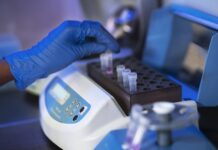
The Elecsys Amyloid Plasma Panel has demonstrated clinical performance and is currently undergoing additional investigation to ensure clinical validation

0
141
New Delhi: Today, barriers to early and accurate diagnosis of Alzheimer’s exist across the globe with up to 75% of people living with the symptoms of Alzheimer’s, but without a diagnosis. Those who have received a diagnosis waited, on average, 2.8 years after symptom onset.
In such a backdrop, the collaboration between Roche and Eli Lilly and Company is aligned to their shared objective to support Alzheimer’s patients by improving the journey to a timely and accurate diagnosis and treatment. If approved, the EAPP test would be an additional tool to identify low likelihood of amyloid pathology in symptomatic patients and determine whether they should proceed to further evaluation and testing that may confirm a diagnosis.
“We are excited to be collaborating with Lilly on such an important area of unmet medical need,” said Matt Sause, CEO of Roche Diagnostics. “Today, over 55 million people are living with dementia and this is projected to increase to nearly 140 million by 20502. Collaboration is essential to ensure these people receive a timely and accurate diagnosis. The Elecsys® Amyloid Plasma Panel has the potential to streamline a person’s journey to diagnosis and, therefore, access to future treatment options.”
“We are pleased to be joining Roche to support the development of yet another potential diagnostic tool,” said Mark Mintun, Lilly group vice president – Neuroscience R&D and president, Avid Radiopharmaceuticals. “We look forward to the robust data and continued collaboration across the field that will be critical to accelerate the ecosystem to aid in a timely and accurate diagnosis of Alzheimer’s.”
In July, Roche announced that the U.S. Food and Drug Administration granted the EAPP Breakthrough Device Designation.
In December 2022, Roche also received FDA 510(k) clearance for its Elecsys® beta-Amyloid (1-42) CSF II (Abeta42) and Elecsys® Phospho-Tau (181P) CSF (pTau181) assays, which identify Alzheimer’s pathology in its early symptomatic stage.