



























BioVarta 2025: Innovation with Intent, Closing the Loop from Science to Impact
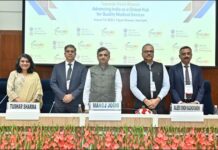
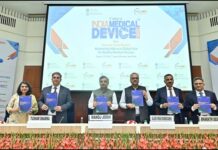
Held in New Delhi on December 13, 2025, the day-long dialogue unfolded through a structured set of conversations spanning translation, frontier innovation, scale-up, investment, and clinical development

 From the perspective of academic translation and entrepreneurship, Dr. Ashutosh Chilkoti, Professor, Biomedical Engineering at Duke University, discussed what it takes to move research from labs to real-world applications. The discussions highlighted the need for translational platforms, shared infrastructure, and supportive ecosystems that reduce barriers for early-stage innovation and enable long-horizon science to mature into scalable products.
 Prof. Samir Mitragotri, Hiller Professor and Core Faculty at Harvard University and the Wyss Institute, emphasized that innovation is incomplete until the loop is closed from science to outcomes. Drawing from his experience translating research into clinical and commercial products, he spoke about designing with scalability, manufacturability, and simplicity in mind. He highlighted that academic innovation can be a powerful engine for progress when paired with rigorous evaluation and purposeful translation pathways.
 Prof. Anil Koul, Adjunct Professor at the London School of Hygiene and Tropical Medicine and Group Chief Scientific Officer at BSV/Mankind Pharma, known for work that has shaped global tuberculosis innovation, reflected on the journey from discovery to impact. Discussions highlighted how breakthrough outcomes require rigorous science, long-horizon persistence, and informed, calibrated risk-taking, alongside systems that support quality, affordability, and scale.
 A panel on Innovation and Indigenisation featured Mr. Praveen Gupta, Managing Director at Premal Lifesciences; Dr. Venkataramanan, CEO of Karkinos Healthcare; Dr. Jayanta Bhattacharya, Dean at THSTI; and Dr. Jagadeesh Bhat of Gangagen Biotechnology. The panel discussed strengthening domestic capabilities while building globally competitive enterprises, emphasizing that indigenisation is most powerful when paired with high standards, collaboration, and export-grade ambition.